
We asked educators around the world one deceptively simple question: how do you take your coffee? The theory was that the order might say something about the years behind it — new to the profession, still finding your feet, versus deep enough in that the order's become automatic. We weren't expecting a clean answer. We got one anyway.
The new-in menu.
Aaliyah, two years in and freshly placed at a school in Fujairah, hasn't landed on a "usual" yet. "I usually go for iced coffee, caramel or vanilla lattes. If it's hot, then a vanilla latte or a coffee with milk is my go-to." Call it a menu rather than an order — still optimistic, still shopping around, exactly where you'd expect someone two years in to be. There's a flavour for every mood, and every mood still gets its own coffee.
Give it a few more years and the menu starts to shrink. Jai, further along in the profession, keeps it simple now: milk and sugar. No syrup, no debate, no ordering ritual — just the thing that works, every time.
"Milk please 😊 — and if it comes with a side of a flight ticket to my next teaching job, I won't complain 🤭."
That's Tammy, three years into the profession — even easier to please than Jai, and openly willing to take a bribe if one happens to come with the order. We can't promise the flight ticket. We can confirm the milk is doable.
The order becomes a shrug.
Further along still, the order tends to simplify into something closer to a reflex than a choice. Janine, an administrator, needed exactly one word: milk. Another respondent, staying anonymous, gave us the same one-word answer — which either means the theory holds, or every teacher in South Africa is secretly the same person by year ten. We're not ruling either out.
One administrator had graduated to a different category entirely — giving orders, not just taking them. Black, or with skim milk and a touch of… well, we'll leave the rest for the person actually making it. Some things stay between a teacher and their barista.
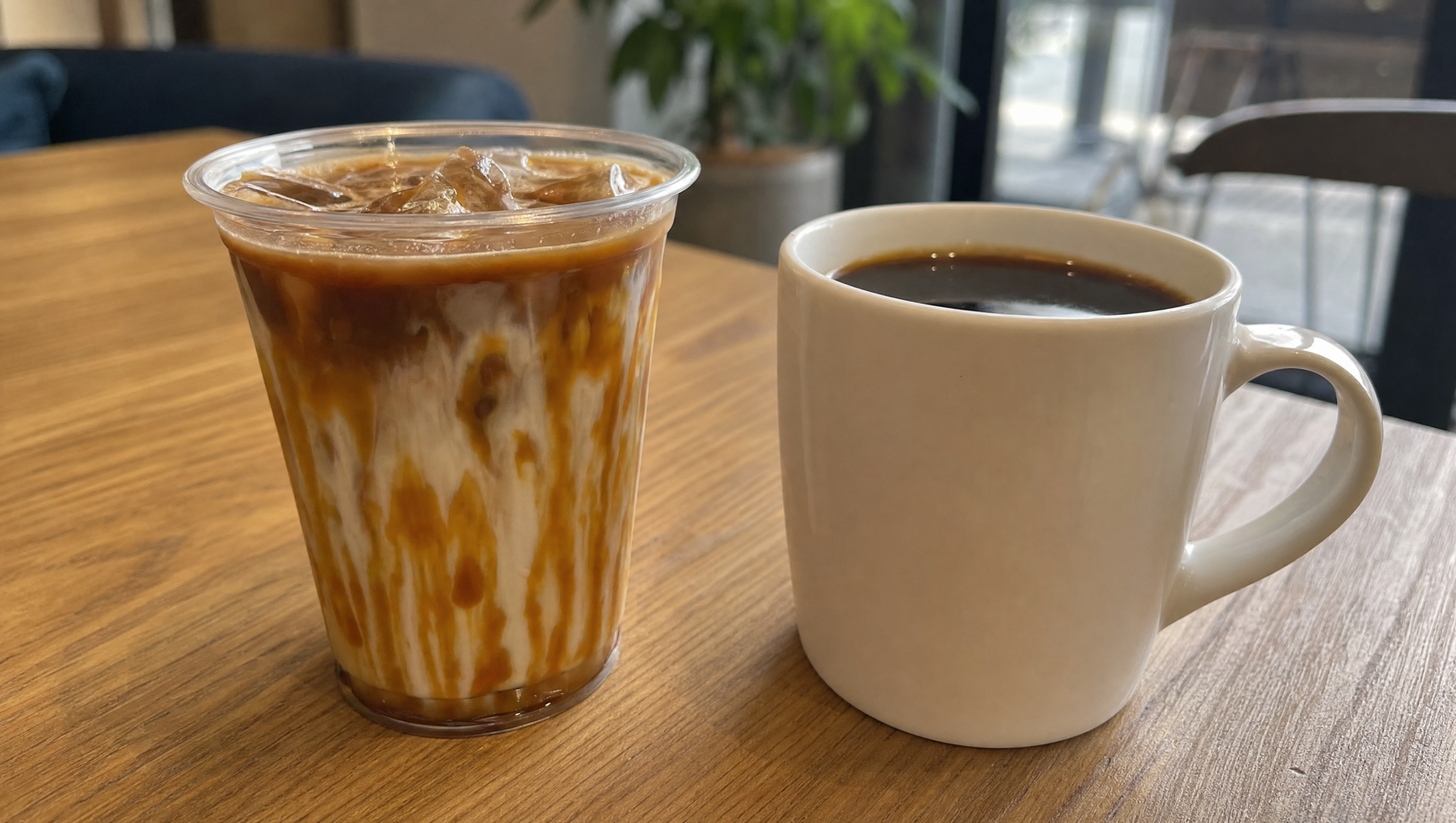
The menu, and the reflex. Somewhere between these two is everyone reading this.
So, does it actually track?
Loosely, yes — and it's not really about the coffee. The newer the teacher, the more the order still asks a question: sweet or plain, hot or iced, a small daily decision made with the same energy as everything else that's still new. The longer someone's been in a staffroom, the less energy gets spent on decisions that don't need it — coffee included. By the time an administrator is giving orders instead of taking them, that's not really about caffeine either. That's about having earned the right to stop asking.
Make of that what you will next time you're queuing behind a colleague who orders in four words or fewer. They've probably been doing this longer than you think.
The real reason it matters: marking stamina.
None of this is really about taste. Ask any teacher what coffee is actually for, and you'll get some version of the same answer: it's fuel for the third hour of marking, not a treat. The order that survives contact with a stack of forty exercise books at 9pm on a school night isn't the interesting one from the menu — it's the reliable one. That's the real reason the "usual" narrows with experience. A new teacher is still discovering what gets them through the evening. A ten-year veteran already knows, and has stopped experimenting with the one tool that has to work every single time.
There's a version of this that applies well beyond coffee, if you squint. The things that survive years in a demanding job tend to be the boring, dependable choices — not because the fun options stopped being fun, but because reliability starts to matter more than novelty once the stakes are a report deadline instead of a Tuesday afternoon.
A rough taxonomy of the staffroom order.
Based on this issue's (admittedly unscientific) sample, a few recognisable types emerged. See if you spot yourself, or someone down the corridor from you.
The Menu Reader — still ordering by flavour, not habit. Usually under three years in. Optimistic about the day ahead, and about coffee generally.
The Simplifier — has landed on milk and sugar, or similar, and sees no reason to revisit the decision. Somewhere in the middle of their career and entirely at peace with it.
The One-Worder — "Milk." Nothing more required. Has better things to think about before 8am than a coffee order.
The Order-Giver — no longer describes what they want, simply states it, with the quiet authority of someone who has sat through a decade of staff meetings. Command, not request.
If none of these quite fit, that's fine too — this was six people, not a peer-reviewed study, and we'd genuinely love to hear where you land. The theory holds up surprisingly well for something built on a Tuesday afternoon and a WhatsApp group, but we're always happy to have it tested further.