
Ask a hundred teachers whether AI belongs in the classroom, and you won't get a hundred answers. You'll get two — and both sides will hold their ground.
The real disagreement isn't about the tool.
It's easy to frame this as a simple question — is AI good or bad for students? — but that's not actually where teachers split. Almost nobody thinks the technology itself is the problem. The disagreement is about what happens in the gap between a student getting stuck and a student getting an answer.
One camp sees a shortcut that skips the part where real learning happens — the productive struggle, the false starts, the moment a student has to sit with not knowing before they work their way to knowing. Take that moment away, the argument goes, and you haven't saved the student time. You've taken the lesson out of the lesson.
The other camp sees a tool no different from a calculator, a spellchecker, or a search engine before it — something that removes friction from the parts of the work that were never where the thinking lived, freeing up mental space for the harder work underneath. Nobody mourns long division by hand. Why mourn this?
This isn't just a staffroom argument, either — the research is starting to catch up with it, and it's just as split as the teachers are.
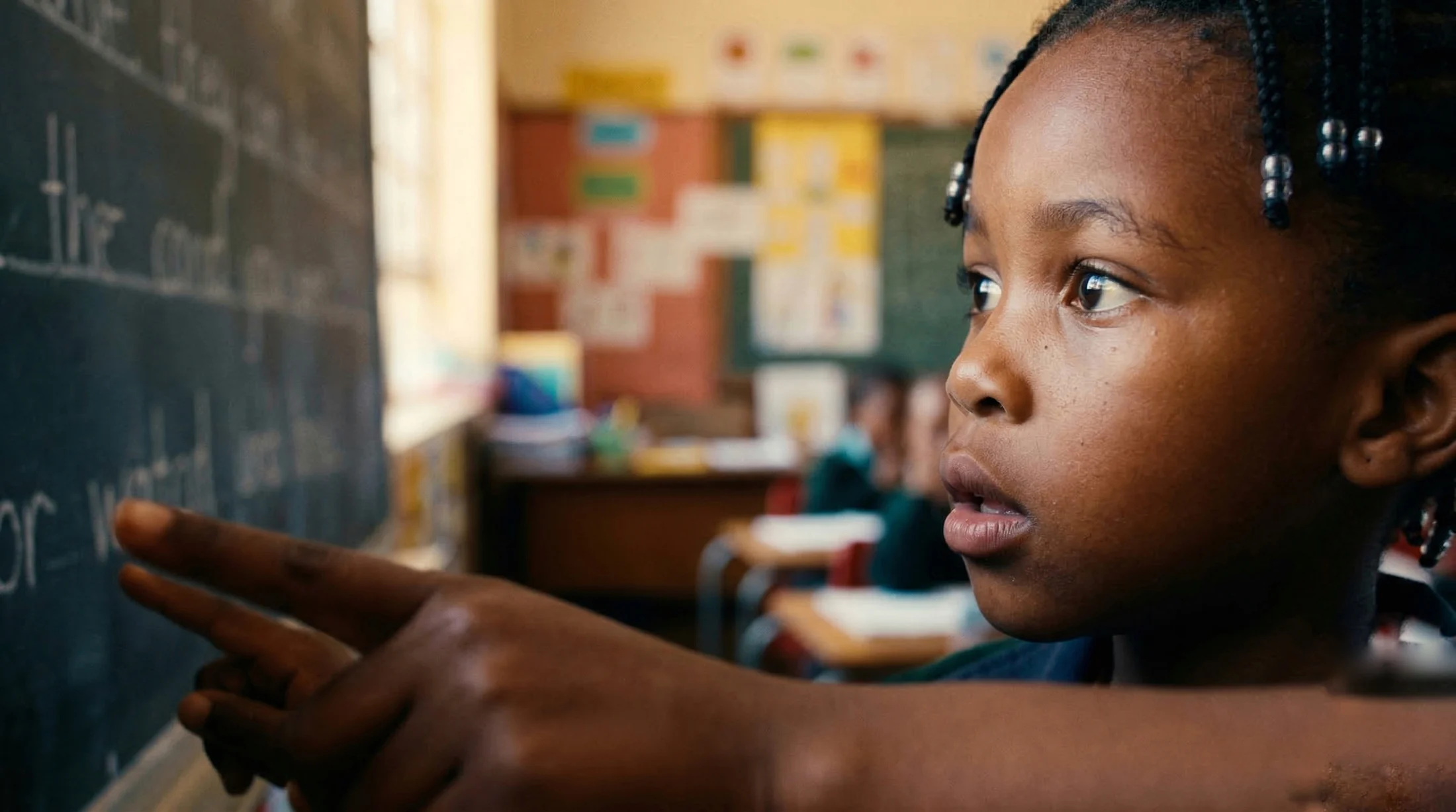
The kind of moment the whole debate actually turns on — a student stuck, mid-thought, before anyone's stepped in.
What the research actually says.
A widely discussed MIT Media Lab study, "Your Brain on ChatGPT" (Kosmyna et al., 2025), put the "cognitive debt" theory to the test directly. Over four months, 54 participants were split into three groups — writing essays with ChatGPT, with a search engine, or with no tools at all — while researchers tracked their brain activity via EEG. The ChatGPT group showed the weakest neural connectivity, the least sense of ownership over what they'd written, and the worst recall of their own essays afterward. The group that wrote unaided showed the strongest engagement of all. It's the closest thing yet to hard evidence for the "parking lot" side of the argument.
A separate study from Microsoft Research and Carnegie Mellon University, surveying 319 knowledge workers on real AI use cases, found something more nuanced: the more a person trusted the AI's output, the less critical thinking they reported applying to it — but the more confidence they had in their own ability, the more they engaged critically regardless. In other words, the tool doesn't erode thinking on its own. Trust without self-confidence does.
The clearest picture of where teachers themselves stand comes from Education Week's coverage of a College Board survey published in October 2025: 87% of educators believe AI tools make it less likely their students will develop strong critical thinking skills, and 89% of principals worry about students becoming tech-dependent. Strikingly, only 45% of teens surveyed shared that concern — a real perception gap between the adults setting policy and the students actually using the tools.
And the trend isn't slowing down. A RAND Corporation report published in March 2026 found that student use of AI for homework climbed from 48% to 62% between May and December 2025 alone — and over that same period, the share of students who believe AI harms critical thinking rose to 67% overall, and 78% among students who don't even use it themselves. Even the students staying away from it are increasingly worried about what it's doing to their peers.
A garden plot, not a parking lot.
Joy Koenig, writing about a completely different context, offered an image that maps onto a classroom almost too well: the difference between an idea parked and an idea planted. A "parking lot" is where an idea just sits — going nowhere, waiting, until someone reaches for the easiest thing available to move it along. A "garden plot" is where an idea is left to actually grow, given room, time, and enough discomfort to develop real roots.
A classroom runs on the same soil. The risk with AI isn't the tool itself — it's a student parking their thinking the moment it gets hard, instead of giving the idea room to grow on its own.
That reframing matters, because it moves the question away from the technology and onto the habit. A student who reaches for AI after genuinely wrestling with a problem is doing something very different from a student who reaches for it the instant the problem appears. Same tool. Completely different relationship to their own thinking.
What the "helping" camp actually gets right.
It's tempting to write off every AI-positive teacher as naive about what's being lost. Most aren't. The strongest version of this argument isn't "AI is harmless" — it's that struggle, on its own, was never the thing that made learning happen. Guided struggle was. A student flailing alone at a problem for forty minutes with no scaffolding isn't building critical thinking. They're building frustration, and often just giving up quietly instead of loudly.
Used well, AI can actually restore some of that guidance at scale — a student stuck on a maths problem can ask for a hint rather than the answer, or have a concept re-explained a different way until it clicks, in a way one teacher managing thirty-five learners simply cannot do in real time for every single one of them. That's not nothing. For a lot of students, that's the difference between staying in the fight and quietly checking out.
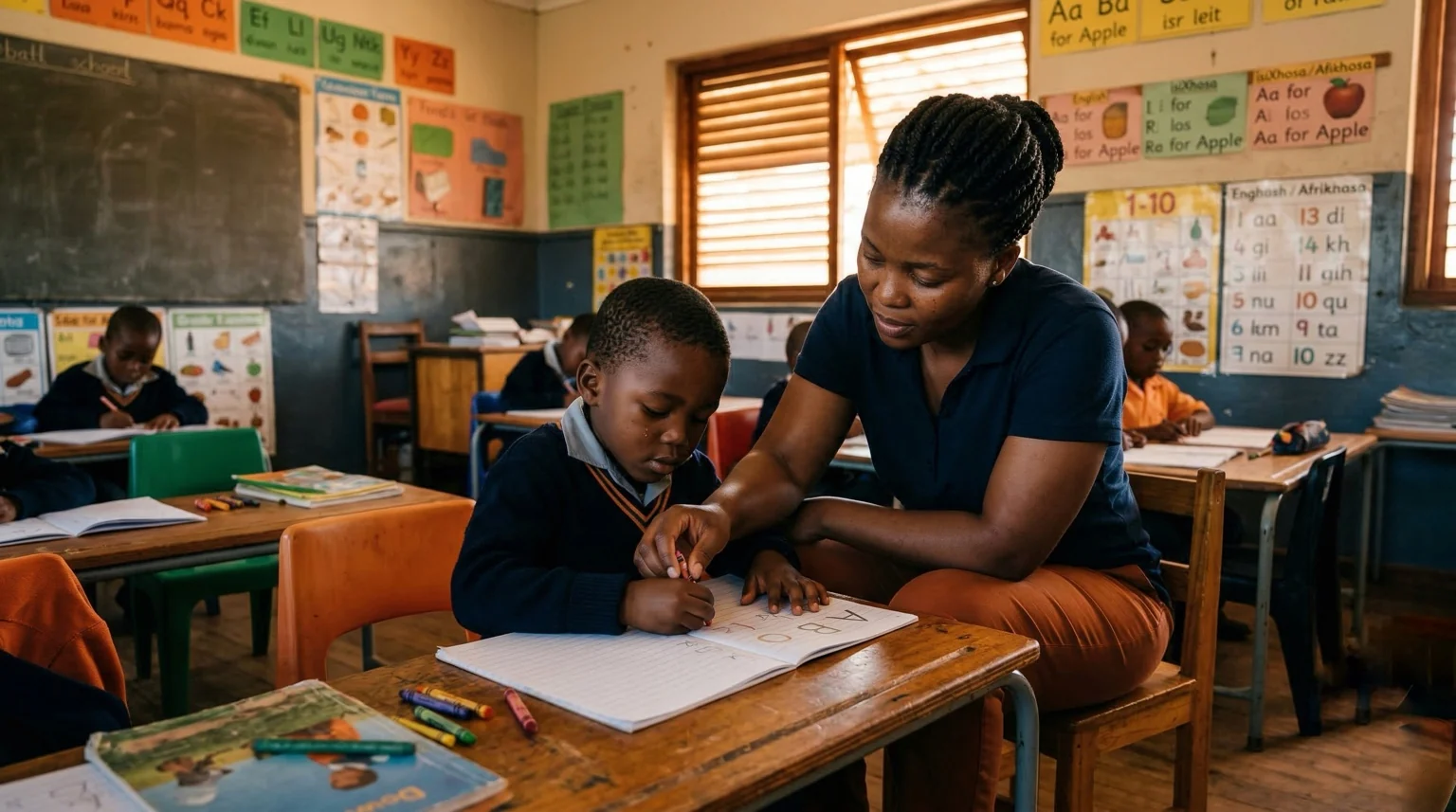
One-on-one guidance, the kind AI is sometimes asked to substitute for — and sometimes genuinely can.
What the "hampering" camp actually gets right.
The opposing case isn't luddism either. The strongest version of it is about default behaviour, not capability. Tools shape habits whether we intend them to or not, and the path of least resistance with a chat-based AI tool is almost always to ask for the finished thing, not the hint. Few fifteen-year-olds — few adults, honestly — will consistently choose the harder, slower route when the easier one is one message away and looks identical from the outside.
That's the real risk: not that AI makes students dumber, but that it makes the appearance of understanding cheaper to produce than the understanding itself. An essay that reads well can now exist without the writer having done the thinking that essays are supposed to represent. A teacher grading thirty of those has no easy way to tell which ones are real.
What this actually looks like on a Tuesday.
Strip the theory away, and the practical question most teachers are actually wrestling with is smaller and more specific: what do I do about homework? Here's roughly how the divide plays out in real classroom policy, based on the conversations we've had so far.
The outright ban. Some schools and departments have simply said no — no AI tools for any written work, full stop. It's easy to enforce as a rule, much harder to enforce in practice, and it tends to push the actual use further underground rather than eliminating it. Students who were going to use it anyway just stop telling anyone.
The "show your work" model. A growing number of teachers are asking not whether AI was used, but for evidence of the thinking behind the final product — draft history, a reflection paragraph, an in-class oral defence of an essay written at home. It's more work to mark, but it makes the appearance-of-understanding problem much harder to fake.
The named-and-taught approach. The most ambitious version treats AI literacy as something to actively teach, not just police — showing students exactly where the tool is useful (structuring an argument, checking grammar, generating counterpoints to test their own thesis against) and where reaching for it skips the part of the assignment that was actually the point.
None of these fully solves the problem. All three are more honest than pretending the problem isn't there.
So which is it?
Probably both, depending entirely on the classroom, the task, and — more than anything — the habits a teacher actively builds around the tool rather than leaves to chance. A school that treats AI as something to be quietly banned and secretly used anyway gets the worst of it: no guidance, no honesty, no chance to build the "garden plot" habit instead of the "parking lot" one. A school that names the tool openly, teaches when reaching for it is genuinely useful and when it's a shortcut worth resisting, has a real shot at getting the upside without eating the cost.
That's a harder answer than either side of the debate wants. It doesn't fit on a poster. But it's the honest one — and it's the reason this argument isn't going away any time soon.
Cast your vote.
This month's Eduplace Journal is running an informal Staffroom poll alongside this piece: is AI hampering learning, or helping it? It won't settle the debate — nothing this new gets settled by a poll — but it'll give us a real, if unscientific, read on where our own teacher community currently lands. We'll report the result, and the reasoning behind it, next issue.
We're not in the business of telling teachers what to think about AI in their own classrooms — that's a professional judgment call only you can make, informed by your students, your subject, and what you're actually seeing. What we can do is keep bringing you real conversations about it, from real educators, instead of pretending the debate is simpler than it is.